
Boxcar vs. Intermodal: When Does Each Make Sense?
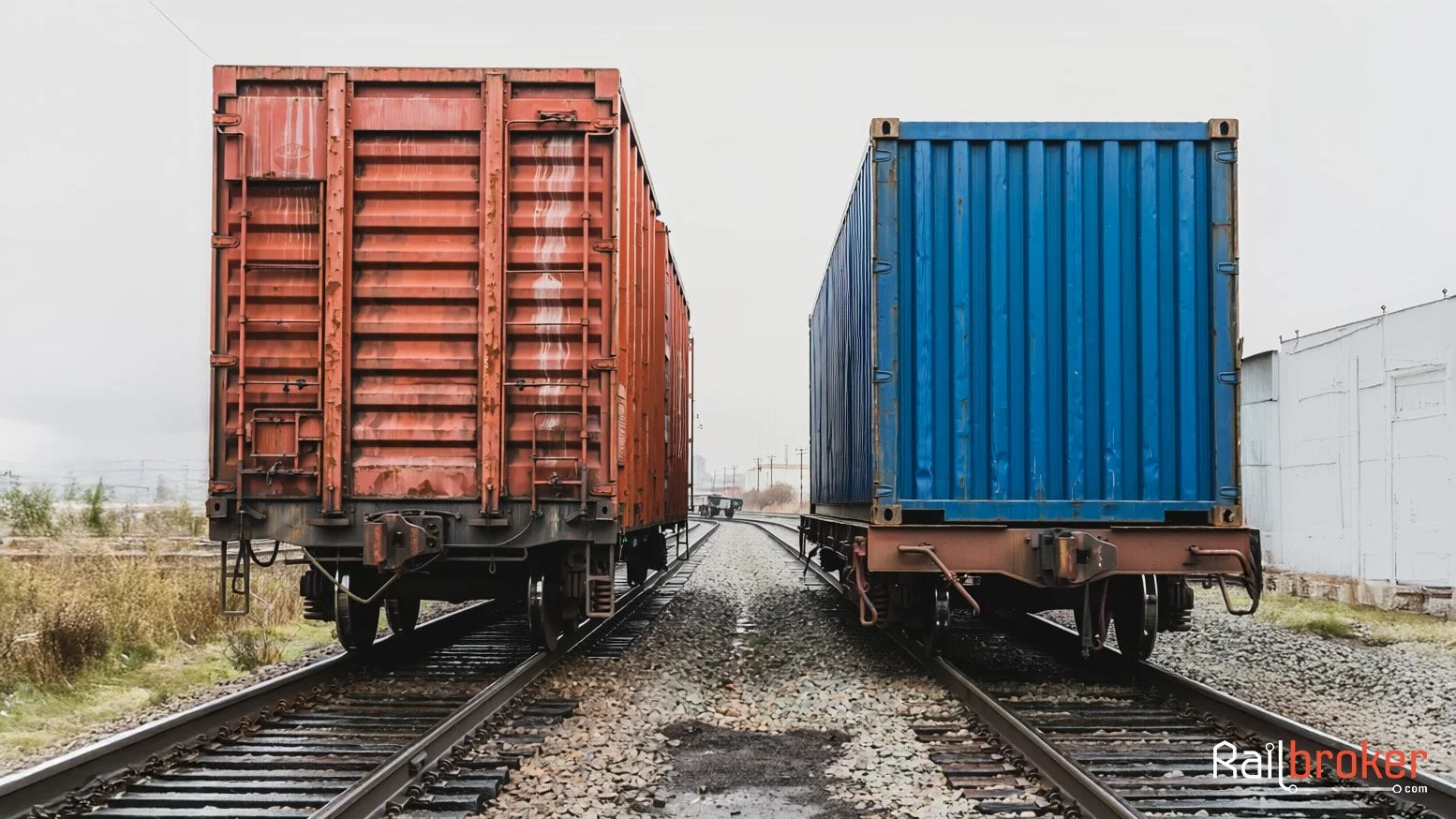
If you're shipping packaged goods, paper products, lumber, or general freight by rail, you've likely encountered the boxcar vs. intermodal question. Both options move similar commodities, both provide weather protection, and both connect to the broader freight network.
So which one fits your operation?
The answer depends on your specific situation—volume, lanes, infrastructure, and how your freight moves on either end of the rail segment. Here's how to think through the decision.
The Fundamental Difference
Boxcars are traditional enclosed railcars that load and unload at rail-served facilities. Your freight goes into the car, the car moves by rail, and your freight comes out at a rail-served destination.
Intermodal uses standardized containers that transfer between truck, rail, and sometimes ship. A truck picks up the container, delivers it to a rail terminal, the container rides on a train, and another truck picks it up at the destination terminal for final delivery.
This distinction drives everything else: infrastructure requirements, flexibility, transit times, and costs.
When Boxcars Make Sense
Boxcars remain the right choice for certain operations, despite decades of intermodal growth. Consider boxcars when:
You Have Rail-Served Facilities
If your origin and destination both have direct rail access—a siding at your plant and a siding at your customer's facility—boxcars eliminate the trucking legs entirely. The car loads at your door and unloads at theirs.
This matters for:
Paper mills shipping to printing facilities
Lumber producers shipping to distribution yards
Manufacturing plants with dedicated rail service
Any operation where both ends have rail infrastructure
Your Freight Doesn't Fit Standard Containers
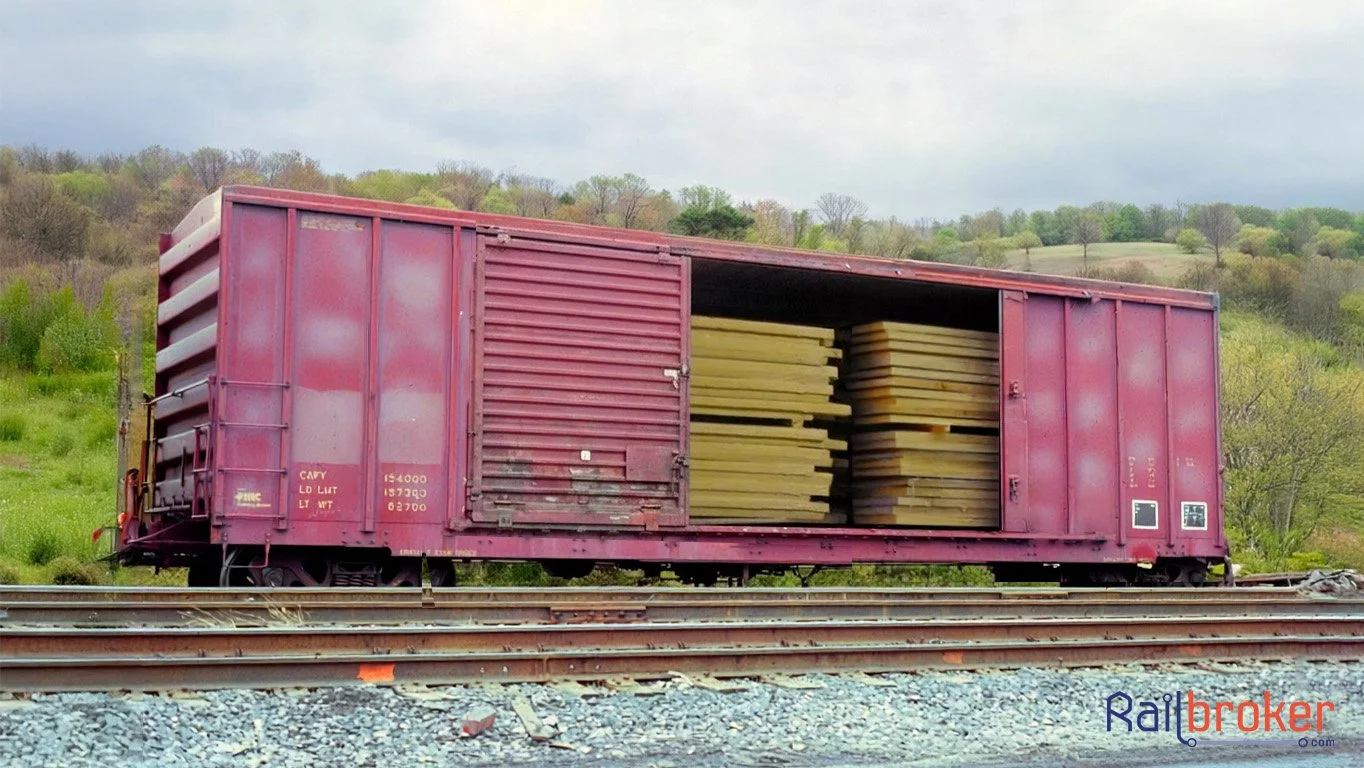
Boxcars offer more cubic capacity than intermodal containers. A 60-foot hi-cube boxcar provides 6,000+ cubic feet of interior space—significantly more than a 53-foot domestic container's roughly 3,800 cubic feet.
For lightweight, bulky commodities that "cube out before they weigh out," this matters. Paper rolls, some packaged goods, and certain consumer products may fit more efficiently in boxcars.
Boxcars also handle:
Oversized items that won't fit container door openings
Freight requiring specialized interior securing (load dividers, bulkheads)
Products needing specific floor types (nailable wood floors for certain cargo)
You're Shipping Heavy Loads
Boxcars can handle heavier loads than intermodal containers. A standard boxcar carries 70-100+ tons depending on configuration. Intermodal containers max out around 42,500-43,500 lbs per container due to chassis weight and road limits.
For dense freight where weight is the constraint rather than volume, boxcars may allow fewer shipments.
Your Volumes Justify Dedicated Equipment
High-volume shippers with consistent lanes sometimes find boxcar service more economical, especially with private or leased equipment dedicated to their routes. The infrastructure investment (rail sidings, loading equipment) pays off when volumes are sufficient.
When Intermodal Makes Sense
Intermodal has grown dramatically for good reasons. Consider intermodal when:
You Don't Have Rail Access
Most shippers don't have rail sidings. Intermodal solves this by using trucks for the first and last mile. If your facility is within roughly 100 miles of an intermodal terminal (most major metros qualify), you can access rail economics without rail infrastructure.
Distance Favors Rail Economics
The general rule: intermodal becomes cost-competitive with over-the-road trucking at distances of 500 miles or more. The longer the haul, the greater the savings—rail moves freight far more efficiently than trucks over distance.
For cross-country moves, intermodal can save 10-40% compared to pure trucking.
You Need Network Flexibility
Intermodal connects to the trucking network at both ends. Your origin doesn't need rail service. Your destination doesn't need rail service. The rail segment handles the long-haul middle, and trucks handle everything else.
This flexibility means:
You can ship to any address, not just rail-served facilities
You can change customers or destinations without infrastructure changes
You're not dependent on a single mode for the entire journey
You're Already Containerized
If your freight already moves in containers—particularly for import/export operations—intermodal keeps everything in the same box from origin to destination. No rehandling between modes means less damage risk and simpler logistics.
Sustainability Matters
Rail produces roughly 75% fewer emissions than trucking for the same freight over the same distance. If your organization has carbon reduction targets, converting truck lanes to intermodal supports those goals while often reducing costs.
The Trade-Offs
Neither option is universally better. Understanding the trade-offs helps match the mode to your operation.
Transit Time
Boxcars move on manifest freight schedules—mixed trains assembled in yards, potentially sitting while cars are sorted and switched. Transit times can be variable.
Intermodal often moves on dedicated trains with scheduled departures. Transit is generally more predictable, though you add truck time on both ends. The rule of thumb: intermodal is "truck plus a day" for single-railroad moves, potentially "truck plus two or three days" if the route involves multiple railroads.
Capacity Flexibility
Boxcars provide more cubic capacity per unit but require rail infrastructure at both ends. Finding available boxcars can also be challenging—the North American boxcar fleet has been shrinking for years.
Intermodal offers easier capacity scaling (containers are more readily available) but with tighter cubic and weight constraints per unit.
Handling and Damage Risk
Boxcars involve loading directly into the car—your freight sits in the same space for the entire journey. Less handling generally means less damage risk for properly secured loads.
Intermodal containers experience more vibration during rail transit (harmonic vibration is a known issue). Proper blocking and bracing becomes critical. However, the container itself isn't handled—only transferred between modes.
Infrastructure Requirements
Boxcars require rail sidings, loading docks compatible with railcar heights, and potentially forklifts or other equipment for loading/unloading.
Intermodal requires only truck access at your facility—the infrastructure investment happens at the rail terminals, not at your site.
Questions to Ask
Before deciding, work through these questions:
Do you have rail service at origin and destination? If yes on both ends, boxcars become viable. If no on either end, intermodal is your path to rail.
How far is the freight moving? Under 500 miles, trucking often wins. Over 500 miles, rail options become competitive.
What's driving your constraint—weight or volume? Heavy, dense freight may favor boxcars. Lighter freight cubing out may favor boxcars for capacity. Standard palletized freight often fits either.
How much are you shipping? High volumes on consistent lanes may justify boxcar infrastructure. Variable volumes or changing destinations favor intermodal flexibility.
How time-sensitive is the freight? If you need speed and flexibility, trucking or intermodal typically wins. If you can plan around rail schedules, boxcars work.
What does your receiver require? Some customers have strong preferences or infrastructure that dictates the answer.
The Hybrid Reality
In practice, many shippers use both. Boxcars for high-volume lanes between rail-served facilities. Intermodal for lanes where flexibility matters. Trucking for short hauls or time-critical freight.
The goal isn't picking one mode forever—it's matching the right mode to each lane and shipment.
Need Help Evaluating Your Options?
Deciding between boxcar and intermodal—or figuring out how rail fits your operation at all—involves variables that aren't always obvious from the outside. Equipment availability, lane economics, terminal access, and infrastructure requirements all factor in.
Railbroker works with shippers across North America to evaluate rail options and source the right equipment. Whether you need boxcars, intermodal containers, or aren't sure where to start, we can help you think through the decision.
Contact us to discuss your freight and rail options
Questions About Boxcars or Rail Shipping?
Navigating rail shipping options—boxcars, intermodal, or other equipment—can get complicated quickly. Railbroker helps shippers find the right equipment and understand what makes sense for their specific lanes and commodities.
If you're evaluating rail options or need boxcar equipment, we can help.
Railbroker provides railcar leasing, sales, and logistics services across the United States, Mexico, and Canada. We specialize in tank cars, hoppers, gondolas, boxcars, intermodal equipment, and passenger railcars.