
Preparing for Grain Season: What to Know About Hopper Availability
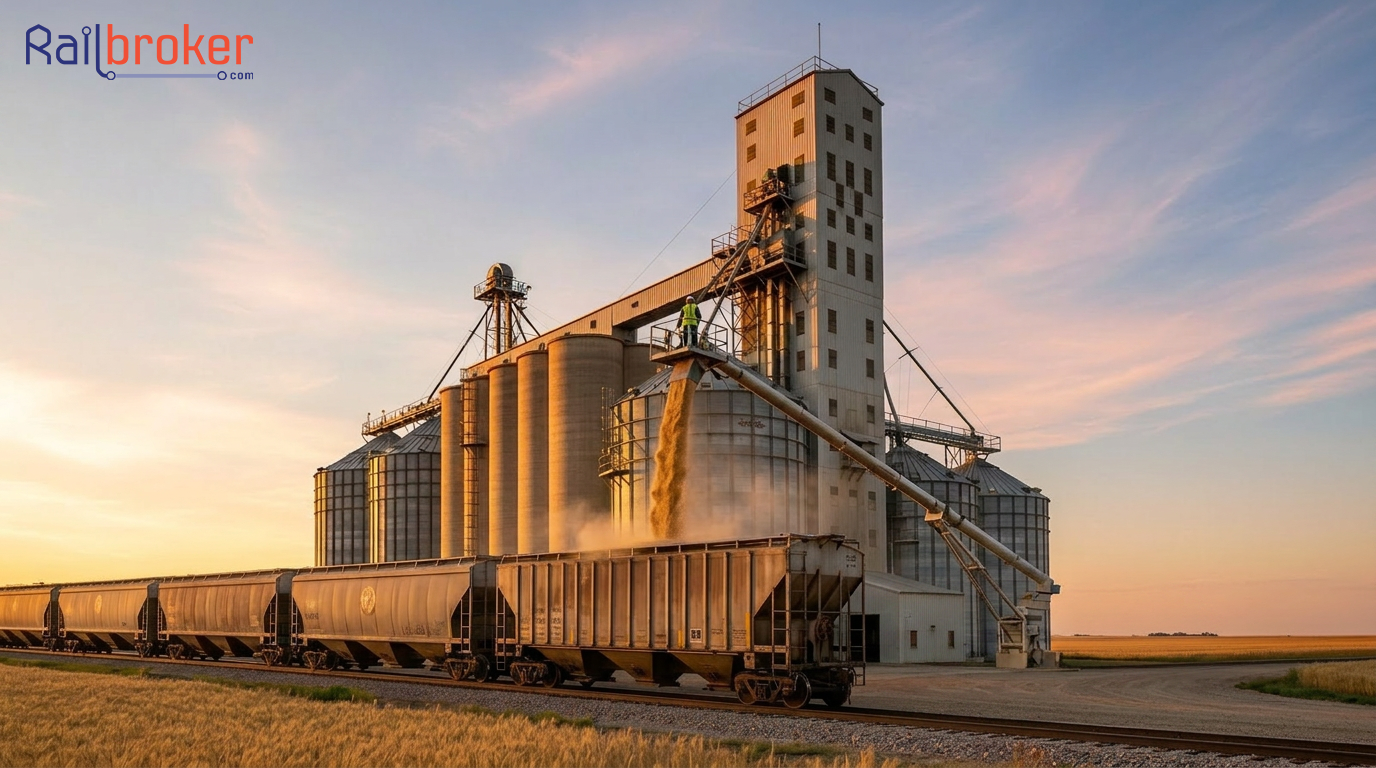
Every fall, the same pattern repeats. Harvest starts, grain pours into elevators, and shippers who didn't secure hopper equipment months earlier find themselves scrambling—paying premium secondary market rates, dealing with unfilled car orders, or watching competitors move grain while their product sits in storage.
Grain season doesn't sneak up on anyone. The harvest calendar is roughly the same every year. But the shippers who move grain efficiently aren't the ones who react to harvest—they're the ones who planned for it in the spring and summer.
Here's how to think about grain hopper availability, what drives the seasonal crunch, and what you should be doing now to avoid problems later.
The Seasonal Cycle
The U.S. grain harvest follows a predictable calendar that drives railcar demand in waves.
Winter wheat comes off first, with harvest running from late May through July across Kansas, Oklahoma, Texas, and the Southern Plains. This is the early mover—railcar demand begins building before the major fall rush.
Corn harvest typically runs from late September through November, with peak activity in October. Corn is the single largest crop by volume in the U.S., and the harvest generates enormous railcar demand concentrated into a narrow window.
Soybeans overlap heavily with corn, harvesting from September through mid-November. The combined corn and soybean harvest creates the peak demand period for covered hopper equipment across the Midwest and Plains states.
For 2026, the acreage picture is shifting in ways that matter for hopper planning. Rising fertilizer costs—driven in part by disruptions to global supply following the closure of the Strait of Hormuz—have pushed some growers away from nitrogen-intensive corn toward soybeans. USDA's March Prospective Plantings report showed 95.3 million intended corn acres (down 3% from 2025's elevated levels) and 84.7 million soybean acres (up 4%). Fewer corn acres doesn't necessarily mean less railcar demand—soybeans still need to move, and the shift affects which regions and corridors see the heaviest harvest-season pressure.
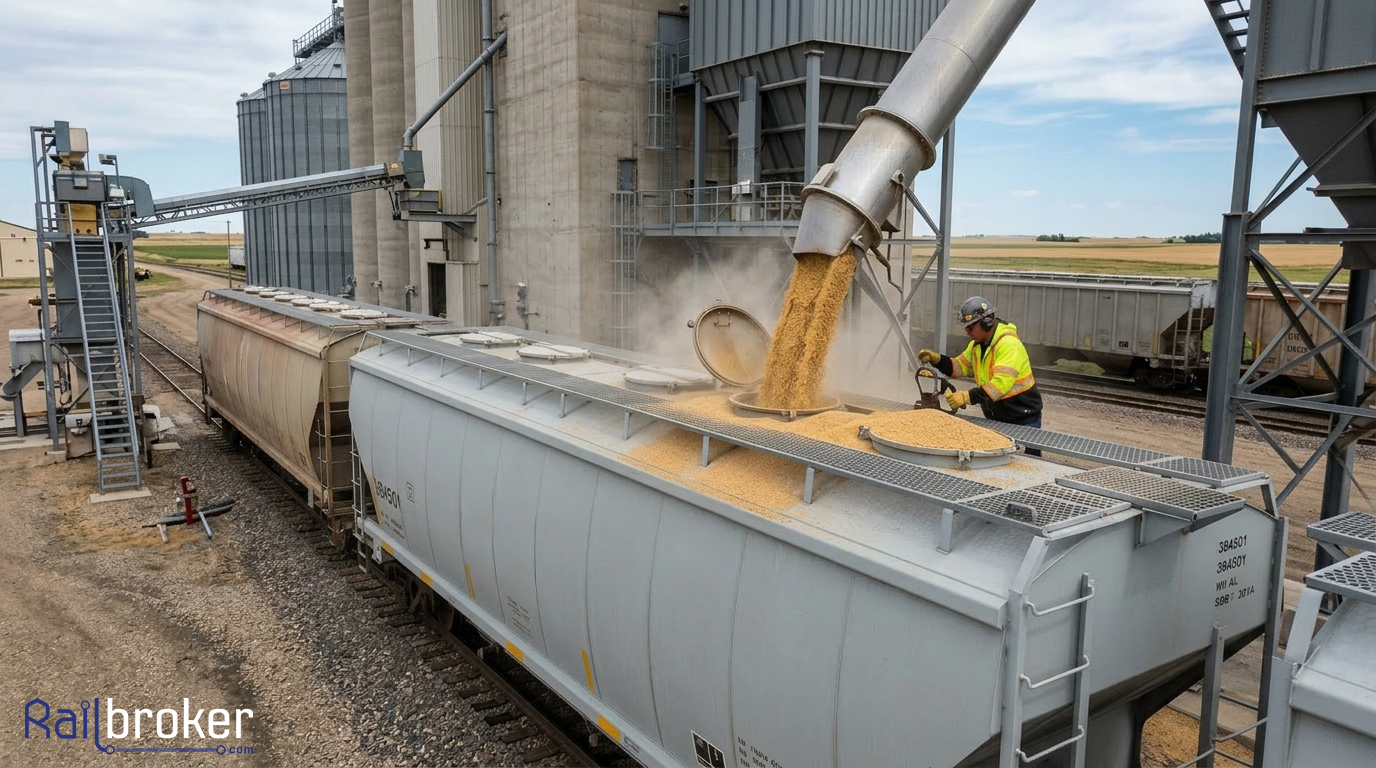
This isn't just an American story. The Canadian grain crop year runs August through July, and Canadian railroads have been investing heavily to keep pace with growing demand. CPKC has committed over C$500 million to high-capacity hopper cars and new Tier 4 locomotives, and CN has been expanding yard capacity and modernizing its hopper fleet after delivering record grain volumes in recent crop years. When North American grain moves at full capacity, every available hopper car is working.
The net effect: railcar demand is relatively moderate through spring and early summer, then ramps sharply from September through December. By the time harvest is in full swing, the market for available grain hoppers has already tightened.
Why Availability Gets Tight
Several factors converge to create the seasonal crunch, and understanding them helps explain why planning ahead matters.
Everyone Needs Cars at the Same Time
This is the most obvious driver, but the math is worth considering. The 2025 U.S. corn crop set a record at over 17 billion bushels, and while the 2026 crop is projected lower at roughly 15.8 billion bushels—driven by a 3% drop in planted acres and rising fertilizer costs—it's still an enormous volume. Add 84.7 million intended soybean acres (up 4% from 2025 as growers rotate toward lower-input crops) and you're looking at massive combined railcar demand hitting the system within a roughly 8-to-10-week window.
There's an important wrinkle this year: record 2025 corn production left heavy carryover stocks—over 9 billion bushels in storage as of March 2026. That grain is still in the system competing for transportation capacity even before the new crop comes off. Full bins heading into harvest mean even more pressure on rail to move product quickly.
Class I railroads originated over 28,000 grain carloads per week during peak harvest in recent years. That's the system running at or near capacity.
The Secondary Market Spikes
When shippers need railcar capacity beyond their committed allocations, they turn to the secondary railcar market—essentially a spot market for guaranteed train service. Secondary market premiums can run hundreds to over a thousand dollars per car above the base tariff rate during peak harvest months.
These spikes are predictable in timing but variable in magnitude. Cold weather events, network congestion, low river levels (which push more grain to rail), and larger-than-expected harvests all amplify the premium. If you're shopping for capacity in October, you're paying peak rates by definition.
The Fleet Is Aging
The grain hopper fleet is going through a generational transition that's been building for years. Tens of thousands of 4,750-cubic-foot covered hoppers built in the 1970s and 1980s are approaching or past the end of their 50-year service life. Roughly 45,000 grain cars over 40 years old are working toward retirement.
New-build replacements are larger—5,200 to 5,400+ cubic feet—meaning approximately four new cars replace the capacity of five retiring cars. Industry forecasts have projected 40,000–45,000 covered hopper deliveries across 2025–2027, with the bulk weighted toward 2026 and 2027 as builders ramp production. But new builds take time to arrive and don't fully offset the pace of retirements in every segment—particularly for shippers who need cars on shorter notice.
This isn't a crisis—it's a structural shift that makes available equipment tighter than it was a decade ago, especially for shippers who need cars on short notice.
Network Congestion Compounds Everything
Railroad network performance directly affects how quickly hopper cars cycle between destinations and return to elevators for reloading. Shuttle train turn times—how fast a unit train makes a round trip—are a key measure of system efficiency. When the network runs smoothly, cars cycle faster and effective capacity increases. When congestion, weather, or crew shortages slow things down, the same fleet moves less grain.
USDA tracking has shown significant improvement in recent years—unfilled grain car orders in the western U.S. dropped from over 4,500 in 2023 to roughly 1,600 more recently. But harvest season remains the highest-stress period, and disruptions can ripple quickly.
The Planning Timeline
If you're shipping grain by rail—or planning to—here's a rough timeline for how equipment decisions should line up with the harvest calendar.
Spring (March–May): Lock In Your Strategy
This is when you should be making equipment commitments for fall—and this window is closing. If you need leased hopper capacity beyond your existing fleet or railroad allocations, now is the time to secure it. Availability is better than it will be in two months, terms are more favorable, and you still have time to position cars where they need to be.
Key decisions to make now: how many cars you need, for how long, what capacity (4,750 cf vs. 5,200+ cf), and where the cars need to be positioned by early fall. USDA's first full 2026/27 production forecasts are arriving this month, which will sharpen the picture—but don't wait for final numbers to start locking in equipment.
Summer (June–August): Position and Prepare
With commitments in place, the focus shifts to logistics. Cars need to be at or near your loading facilities before harvest hits. If you're leasing equipment that needs to be repositioned from another region, build in transit time—railcar repositioning isn't overnight.
This is also the time to confirm that your railroad service arrangements are in order. Shuttle train commitments, switch schedules, and destination capacity all need to be coordinated before the first grain loads.
Fall (September–November): Execute
By harvest, your equipment should already be in place and your logistics plan should be running. If you're still looking for cars in September, you're competing with every other shipper in the same position—and paying accordingly.
The shippers who move grain efficiently during harvest are the ones who treated it like a known event, not an emergency.
Questions Worth Asking Now
Whether you're an established grain shipper or evaluating rail for the first time, these questions help frame your grain season equipment strategy:
How many cars do you actually need—and for how long? Grain season is inherently temporary. If you need 50 cars for three months, you shouldn't be signing a five-year lease. But short-term grain hoppers aren't always easy to find, which means you need to start looking early.
What's your storage situation? This is especially important heading into the 2026 harvest. U.S. grain storage capacity sits at roughly 25.5 billion bushels—and with heavy carryover stocks from 2025's record production, the system is already operating without much buffer. Tight on-farm and elevator storage puts more pressure on transportation to move grain quickly after harvest. If you can't store it, you need to ship it—and shipping it requires having cars available when the combine is running, not three weeks later.
Can your loading and receiving facilities handle the volume? Hopper availability doesn't help if your elevator can't load fast enough or your destination can't unload fast enough. Dwell time at facilities directly affects how many effective loads you get out of your car fleet during the season.
Are you accounting for the full round trip? A hopper car that takes 10 days for a round trip gives you roughly 9 turns during a 90-day harvest window. A car that takes 20 days gives you 4–5 turns. Network velocity, distance to destination, and unloading speed at the other end all determine how much grain each car can actually move.
What's your contingency if the harvest is bigger than expected? The 2025 corn crop came in at a record 17+ billion bushels, and even with 2026 acres down, above-trend yields could still produce a large crop. Meanwhile, carryover stocks from last year's record harvest are already straining storage. If your operation is sized for an average crop and the harvest comes in well above trend, where does the extra capacity come from? Having a plan before you need it is cheaper than finding one in October.
Are your cars the right size for your routes? If your elevator is on a branch line with weight restrictions, 286K gross rail load cars may not be usable at full capacity. Confirm route compatibility before committing to equipment—especially if you're transitioning from older 263K cars to newer, larger hoppers.
The Cost of Waiting
The math on grain season planning is straightforward. Equipment secured months in advance—on reasonable terms, with time to position and coordinate logistics—costs less and performs better than equipment scrambled for at the last minute.
Shippers who wait until harvest to address equipment needs face higher lease rates on limited inventory, secondary market premiums for railroad service, potential unfilled car orders that leave grain sitting in storage, and less flexibility in terms and conditions because they're negotiating from a position of urgency rather than planning.
None of this is surprising. But every year, the same cycle plays out—and the shippers who planned ahead move their grain while others wait.
Getting Ahead of the Season
Securing grain hopper equipment—especially on flexible terms that match a seasonal operation—requires knowing what's available, where it is, and how quickly it can be positioned. That visibility is difficult to build from scratch, particularly in a market where the fleet is transitioning and available inventory moves quickly.
A railcar broker with access to hopper equipment across multiple sources can help you find cars that match your capacity needs, lease terms, and timeline—without forcing you to commit to a multi-year deal when you need seasonal flexibility.
Need Grain Hoppers?
Railbroker sources covered hopper equipment for grain shippers across North America—corn, soybeans, wheat, and specialty crops. Whether you need seasonal capacity for harvest, bridge equipment while waiting on new builds, or a longer-term fleet solution, we can help match equipment to your operation.
Planning for Grain Season?
The time to secure hopper capacity for fall harvest isn't fall—it's now. Railbroker works with grain shippers to source equipment on terms that match seasonal operations, including short-term and flexible lease arrangements.
If you're evaluating your grain season equipment needs or want to understand what's available, we can help.
Railbroker provides railcar leasing, sales, and logistics services across the United States, Mexico, and Canada. We specialize in tank cars, hoppers, gondolas, boxcars, intermodal equipment, and passenger railcars.